


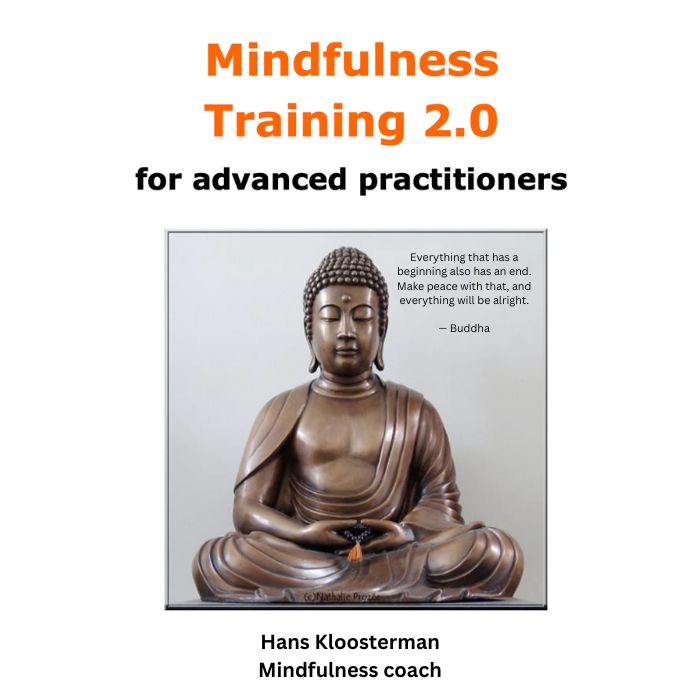
Mindfulness 2.0 Compassion Training - 1-on-1 or online
8-Week Mindfulness & Compassion Training for Advanced Practitioners 2.0 – From self-compassion to compassion, from duality to unity
Individual guidance (1-on-1) with a personal workbook and tailored assignments, offered on an hourly basis.
What will you learn?
- You have already taken important steps in the Mindfulness Training 1.0 in recognising, acknowledging and accepting your thought and behaviour patterns. In this advanced training, you learn how to consciously release and transform limiting or negative patterns.
- To understand, practise and embody the path from duality to unity
- To deepen self-knowledge through structured self-inquiry
- To develop from self-compassion towards genuine compassion for others
- To live more consciously from light, love, abundance and inner peace
Transformation means consciously redirecting negative thought and behaviour patterns into neutral or positive ones. To initiate transformation, thorough self-inquiry is essential. This form of meditation differs fundamentally from concentration-based practices such as the body scan. The meditation method used here is known as analytical insight meditation (vipassana meditation).
Self-inquiry focuses on physical sensations, emotional experiences and the continuous stream of thoughts. A well-developed capacity for concentration and visualisation is a prerequisite, as it enables the mind to open safely and clearly for deeper investigation.
This advanced mindfulness and compassion training consists of approximately 50% self-inquiry and 50% transformation techniques. These techniques originate from the sixth step on the Buddhist path to enlightenment and are based on: the four transcendent qualities (equanimity, loving-kindness, compassion and joy), and the six paramitas: ethical discipline, generosity, patience, enthusiastic effort, meditation and wisdom.
By consciously cultivating these qualities within yourself and in relation to others, negative patterns gradually diminish and positive qualities strengthen. Compassion arises naturally within the mind. Compassion is defined as the sincere wish to reduce suffering in others. In this phase, the focus shifts away from an ego-centred perspective towards a more inclusive and connected experience of life. As a result, overall wellbeing increases and the experience of suffering continues to decrease beyond what is achieved in the foundational mindfulness training.
The final chapter of the workbook describes the third stage of the development of consciousness: the state of Samadhi. To stabilise in this non-dual state, negative patterns must first be released and the mechanisms of attraction and aversion brought to rest. In this state, one reconnects with the original nature of awareness. Attraction and aversion, together with ignorance, are considered the most deeply rooted disturbances of the mind. This chapter outlines the ultimate direction of the path and serves as an orientation point; it is not a standalone training module but an indication of further deepening.
The Mindfulness & Compassion Workbook 2.0 was written by Hans Kloosterman in 2014 and forms the foundation for this advanced individual training.
Reimbursement
In some cases, it is possible to receive (partial) reimbursement for mindfulness training through supplementary health insurance. Hans is a member of the VMBN Association and is certified as a Mindfulness Trainer Category 1. This certification means that, depending on your insurer and policy, reimbursement may be available. Always consult your health insurance provider before booking the training.